
“A logic model is a systematic and visual way to present and share your understanding of the relationships among the resources you have to operate a program, the activities you plan, and the changes or results you hope to achieve” (W.K. Kellogg Foundation 2004).
Developing a logic model can enhance the ability to plan, design, implement, analyze and generate knowledge. A logic model is a relatively simple image that reflects how and why a program will work. It conceptualizes the resources needed, activities that will be initiated, outputs (services or products delivered because of activities) and both short and long term outcomes expected (evidence of change). The design of a logic model is usually presented in a visual format.
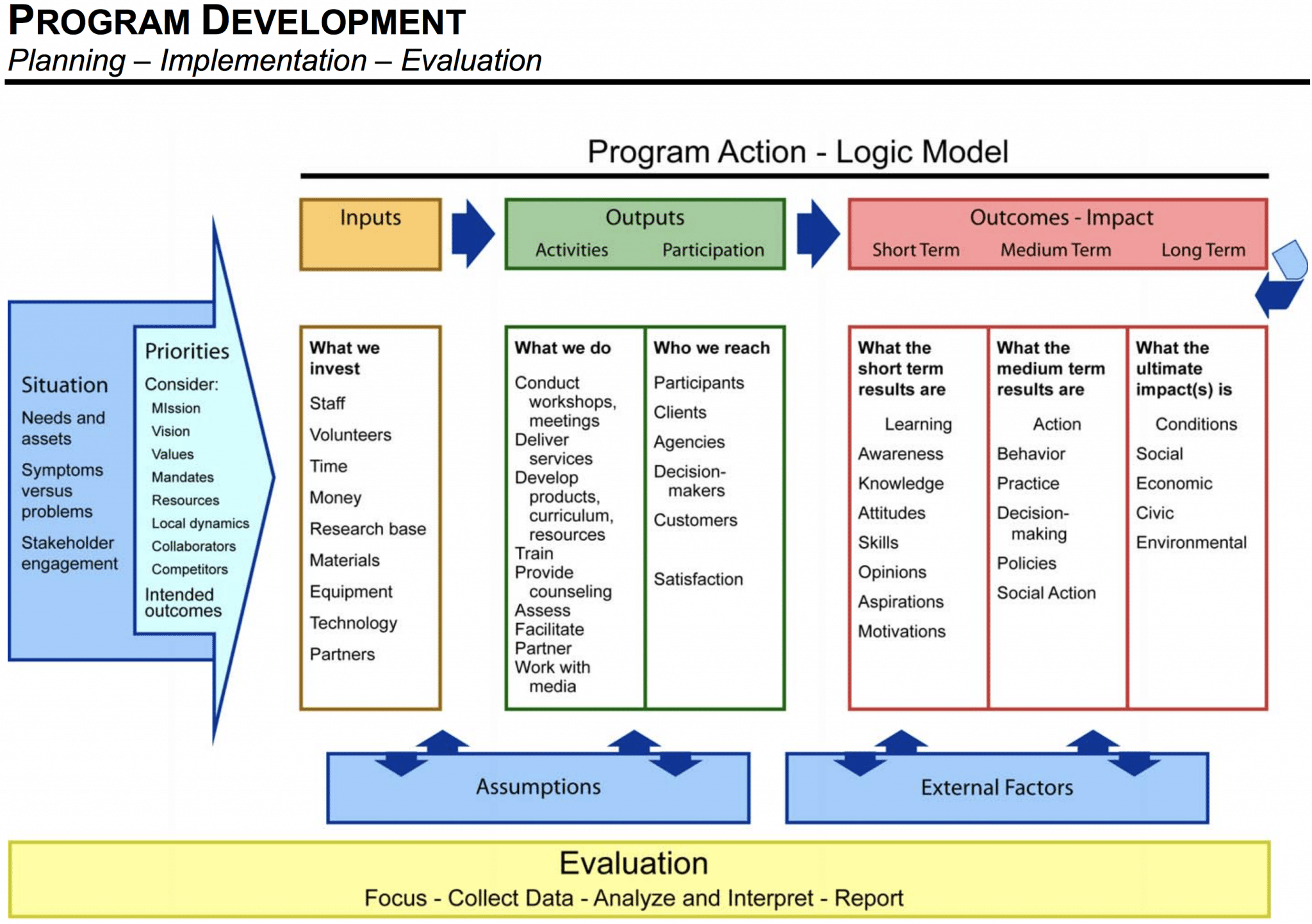
What is the challenge that the project is designed to address?
1. Inputs or Resources
What is needed to implement the project and to achieve the intended results
a. Human resources
b. Financial
c. Organizational
d. Community
2. Strategies or Activities
What you will do with the resources available to you to accomplish the project
a. Processes
b. Tools
c. Events
d. Technology
e. Actions
Intended Results:
3. Outputs or results of strategies
Direct products of the project activities, what we expect to be accomplished
a. Types and levels of services to be delivered
b. What will happen if the activities or strategies are implemented
4. Outcomes
Desired outcomes of the implementation strategies
Measurable results and specific changes
What is the difference that the resources, strategies and activities have made
a. Short term most immediate and measurable
b. Long term achievable outcomes that will occur after the initial outcomes
5. Impact
Fundamental change that will occur as a result of the project activities
Big picture, related to “Overall Goal”
The actual beliefs about the project, participants and how the change will be realized. How and why the change strategies will work.
- Assumptions can be used for defining program goals or services, as well as organizing and implementing program evaluation.
Kellogg Foundation Logic Model Development Guide
The Pell Institute, How to Create a Logic Model
University of Wisconsin-Extension Program Development and Evaluation
Identifying components of a logic model – CDC
Kellogg Foundation Logic Model Development Guide
The Pell Institute, How to Create a Logic Model
University of Wisconsin-Extension Program Development and Evaluation